Diese Vorveranstaltung zur Entwicklungstagung #ET2020 fand am 20. November 2019 in der Aula am Campus A-AKH Wien statt. Zum Bericht und zum Livestream
Zum Thema weiterlesen: Europas Grüner Deal: Vorzeigeprojekt oder Klimaschutz auf Kosten des Globalen Südens? Von Martina Neuwirth (VIDC Global Dialogue)
Background:
The use of natural resources is unequally distributed at a global level. Those who use the least resources, bear most of the effects of excessive resource use, above all the impact of climate change. Thus, “environmental inequality” might reinforce income inequality as well as gender inequality, within and between countries. Ecological inequality is also a symptom of an unequal exchange: While countries of the Global South export resources, countries of the Global North outsource dirty production, and thereby environmental costs, to the Global South.
Mitigating and adapting to climate change will require large (public) investments to leapfrog traditional carbon-intensive economies. But funds are scarce to meet the enormous amounts needed. Environmental taxes are not only useful in deterring environmentally damaging behavior. They can generate tax revenues that enable especially poorer cash-strapped countries of the Global South to meet internationally agreed climate and development targets. However, environmental tax reforms should not exacerbate social inequalities.
The following questions will be addressed throughout the event: What causes environmental inequality? Who is affected and how? Could environmental taxes be a useful instrument to fight environmental inequality? Which experiences have been made in countries of the Global South?
Program:
Welcome and book presentation:
Margareta Grandner, Department of Developing Studies, University of Vienna, co-editor of the book „Globale Ungleichheit“ (“Global Inequality”)*
Panel Discussion with:
Anke Schaffartzik , Senior Scientist at the Institute for Social Ecology (SEC), University of Natural Resources and Life Sciences Vienna
Karlygash Kuralbayeva, Fellow in Environmental Economics a the Department of Geography and Environment, London School of Economics
Video contribution: Rodrigo Pizarro, Professor at the University of Santiago of Chile (USACH) and former Head of the Environmental Economics Division of the Ministry of the Environment of Chile (2014-2018)
Moderation:
Martina Neuwirth, Vienna Institute for International Dialogue and Cooperation (VIDC)
Speakers:
Anke Schaffartzik is Senior Scientist at the Institute for Social Ecology. Research areas include global resource use and international trade, the international division of labor, extractivism as well as social metabolism (the flows of materials and energy between nature and society).
Karlygash Kuralbayeva: Fellow in Environmental Economics am Department of Geography and Environment, London School of Economic Prior to this she was a Research Officer at the Grantham Research Institute. Karlygash works on macroeconomic aspects of climate change policies, and interactions between environmental policies and business cycles.
Rodrigo Pizarro is professor at the University of Santiago of Chile (USACH). He was the former Head of the Environmental Economics Division of the Ministry of the Environment of Chile (2014-2018), where he designed and implemented the first Environmental Tax in Chile, among other major initiatives. Mr. Pizarro is an economist from the London School of Economics and holds a PhD from Stanford University.
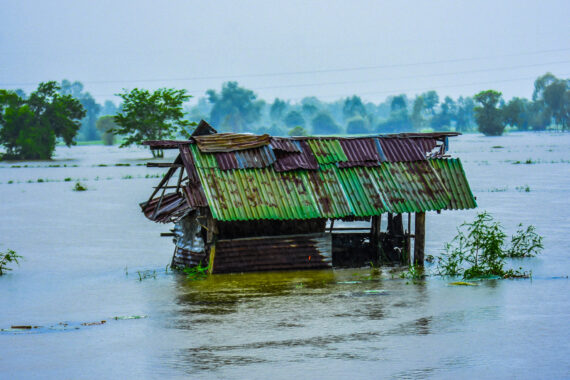
Photo: © Shutterstock/Neenawat Khenyothaa.
*Book presentation:
 Karin Fischer; Margarete Grandner: Globale Ungleichheit. Über Zusammenhänge von Kolonialismus, Arbeitsverhältnissen und Naturverbrauch. Wien: Mandelbaum 2018, ca 400 Seiten, erscheint im November 2019; Reihe GEP, Band 19
Das Buch widmet sich der ungleichen Verteilung von Einkommen, Vermögen und Lebenschancen auf der Welt. Einzelne Beiträge behandeln die historischen und aktuellen Auswirkungen von Kolonialismus und Rassismus, von globaler politischer Ökonomie und Finanzmarktkapitalismus, internationaler Arbeitsteilung und ökologischer Ungleichheit. Ungleichheit zeigt sich am deutlichsten in der Gesellschaft, in einer Gemeinschaft, an dem Ort, an dem wir leben. Allerdings sind wir auf vielfältige Weise in globale Prozesse eingebunden, die lokale Ungleichheit schaffen oder verstärken.
This event is part of the current focus „global inequalities“ of the Mattersburger Kreis and Paulo Freire Center. The highlight of the debates will be the 8th Austrian Development Conference in Linz.
A joint event of the Vienna Institute for International Dialogue and Cooperation (VIDC), the Institute of Social Ecology (SEC) at the University of Natural Resources and Life Sciences, Vienna (BOKU), Mattersburger Kreis and Paulo Freire Zentrum as well as the Department of Developing Studies at the University of Vienna.