The program of the 8th Austrian Development Conference 2022
The program has gradually being worked out in the ARGE Development Conference. The concept is understood as a process in which various actors can contribute. The Paulo Freire Centre is responsible for coordinating and steering the process.
Friday evening, 11.11.2022:
17:00: Opening, welcome address
- Councillor Thomas Gegenhuber, representing the mayor of Linz Klaus Luger
- Member of the Landtag Helena Kirchmayr, representing the governor of Upper Austria Thomas Stelzer
17:30: Understanding: „Global Inequalities, COVID19, War and Violence“.
Opening polylogue with three speakers, using country examples to address forms of inequality that have been particularly evident in the COVID19 pandemic; these will be linked to structural violence, war and intersectionality.
- Paula Banerjee (International Association for the Study of Forced Migration (IASFM), Kolkata/India)
- Ella Lamakh (Democracy Development Center, Kyiv/Ukraine)
- Nelly Busingye (Publish What You Pay (PWYP) International Secretariat, Kampala/Uganda)
Moderation: Karin Fischer, University of Linz and Mattersburg Circle
approx. 20:00: Three types of wraps from „Good Karma“– vegan & vegetarian, regional & organic
Saturday, 12.11.2022:
9.00-9.15 a.m.: morning introduction: ADA today and the crises of this world. Erwin Künzi, Head of ADA’s Department of Issues and Quality (representing ADA Managing Director Dr. Friedrich Stift), in conversation with Andreas Obrecht (appear/OeAD).
9.15 – 10.45 a.m.: Acting: „Embattled statehood and peacebuilding. Approaches to reduce the global imbalance“.
How do violent conflicts like Russia’s current war of aggression against Ukraine affect geopolitical relations? What are the consequences for inequality? What could a humanist-feminist foreign and security policy look like that reduces military conflicts because there is more equality?
Keynote, comments and plenary debate.
- Keynote: Victoria Scheyer (Leibniz-Institut Hessische Stiftung Friedens- und Konfliktforschung (HSFK) and Women’s International League for Peace and Freedom, WILPF)
- comments: Ulli Brand (Department of Political Science, University Vienna)
- plenary discussion
Moderation: Andreas Obrecht (appear/oead)
Break with coffee & co.
11.15 a.m. – 13.00 p.m.: The interactive workshops
Workshops last 1.45h each and work intensively interactive and participant-oriented, in small SE-rooms with max. 20 participants.
Lunch + break
14.30 p.m.: The parallel forums
The topics of the forums bring together regional and conceptual dimensions in their contradictory nature. The forums follow the common guiding questions of the development conference.
The forums will generate theses to answer these key questions. If possible, one speaker from the Global South (which also includes the European periphery!) should participate in each forum. A good mix of speakers from academia and NGOs is sought, as well as a gender balance. A maximum of 3 to 5 speakers should be involved.
Forums will last 4 hours, framing the afternoon break and will take place in manageable lecture halls and will work with a mix of short presentations & panel discussions. They are designed for 40-70 participants each.
Topics of the forums:
1. Inequality in the global agricultural and food system
2. Tax justice against inequality
3. Inequality in globalised production and sustainable industrial policy
4. Inequality as a consequence of the climate crisis: forced migration
5. Inequality in education, knowledge and social policy
6. Unequal statehood
7. Basic forum: What is Global Inequality?
16.00-17.00 (time slot): Break of 30min with coffee & co.
19:00: Dinner / buffet (for self-payment)
20:00 to approx. 23.00: Evening programme: music, joy and lots of communication – a concert by and with Christoph & Lolo
Sunday, 13.11.2022
9:00 – 9:15 a.m.: morning introduction: „Global Female Future“. 40 years of global feminist struggles in one book. This publication, produced on the occasion of the 40th anniversary of Frauen* Solidarität, will be presented by co-editor Andreea Zelinka.
9.15 a.m. – 9.45 a.m.: Transformative-participative theatre with Susanna Stich-Bender
9:45 a.m. – 11:00 a.m.: Learning: „We already know the solution to the problem. Don’t we?“
Two plenary lectures on a relevant aspect of the question of global inequality, with perspective on strategies and solutions, taking into account the current geopolitical situation.
1) Ivo Lesbaupin (Brazil): Where do new approaches actually emerge? How to face social and environmental crisis? What are the alternatives to dominant economic and social paradigm?
2) Joy W. Ndubai (Doctoral Candidate (WU) and Research Associate at the Global Tax Policy Center, Institute for Austrian and International Tax Law, WU/Wirtschaftsuniversität Wien): What could global tax justice achieve? The prospects of the AfCFTA (African Continental Free Trade Area) and the challenges of a future single market – and how EU-Africa engagement could potentially support the cross-learning between authorities.
Moderation: Martina Neuwirth (VIDC/Mattersburger Kreis)
Break with coffee & co.
11.30 a.m. – 12.45 p.m.: Learning: confronting models – building alliances.
fishbowl with the speakers from the forums & more.
In the concluding fishbowl, options for action and political demands discussed in the forums will be compiled and contrasted in a critical-constructive dialogue. Finally, the role of the SDGs or alternative concepts for an effective reduction of global inequalities in their multiple dimensions (race, class, gender…) will be discussed.
Julia Günther (WIDE – Entwicklungspolitisches Netzwerk für Frauenrechte und feministische Perspektiven)
12.45 p.m.: Closing & Farewell
13.00 p.m.: End
Supporting programme:
- Information stands of the participating organisations
- Bookstall of the Mattersburg Circle
- Childcare
- …
Last programme items to be determined and any changes will be continuously updated on this website. To stay informed, we also recommend the Paulo Freire Centre newsletter and our social media channels!
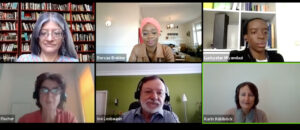
#webET2020: Auf der Suche nach gemeinsamen Lösungen.
Dass die Krise um COVID-19 nicht alle im gleichen Maße trifft und somit Ungleichheiten verschärft, wurde in den letzten Monaten deutlich. Wie reagieren verschiedene Staaten darauf und was kann aus den bisherigen Reaktionen auf die Pandemie gelernt werden? Das Global Panel der #webET2020 am 14. November 2020 widmete sich der Auseinandersetzung mit diesen Fragen und...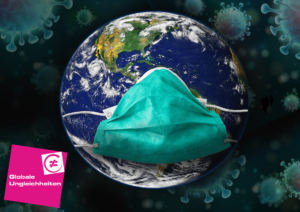
Beste aller Welten – Reden über Ungleichheit.
Zwei gegenläufige Trends sind in der Entwicklungspolitik zu beobachten: Einerseits beeindruckende Erfolge bei der Armutsbekämpfung, andererseits die Zunahme der globalen Ungleichheit. Wie diese beiden Phänomene mit den großen Herausforderungen unserer Zeit – etwa der ökologischen Krise – zusammenhängen, wurde in der Auftaktveranstaltung zur #webET2020 debattiert. Am 11.11.2020 diskutierten online Entwicklungssoziologin Karin Fischer (JKU Linz) und...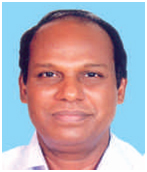
Venkat Ramnayya
Venkat Ramnayya hat an der Xavier School of Management in Jamshedpur und am Xavier Institute of Social Service in Ranchi in Indien studiert. Mehr als fünfundzwanzig Jahre lang arbeitete er an der Schnittstelle von Industrie und Entwicklung. Er beriet zahlreiche Organisationen wie das World Food Programme, UNIFAD, DeviPesticides uvm. Außerdem unterstützte er verschiedene Institutionen wie...Online Dialog 4) Globaler Blick: Versuch einer Synthese.
Online Dialog mit Redner*innen aus/über Asien, Lateinamerika, Afrika und Europa. Zum Veranstaltungsbericht Aufzeichnung Online Dialog 4) Globaler Blick: Versuch einer Synthese Das Abschlusspanel wird sich mit diesen zentralen Fragen befassen: • Was sind Ähnlichkeiten und Unterschiede bezüglich sozialen und ökonomischen Konsequenzen in den verschiedenen (Welt-)regionen oder Ländern)? Gibt es allgemeine Folgen, die alle Weltregionen auf...Online Dialog 3) Afrika/Kenia und Uganda: Illegitime Finanzströme und Steuergerechtigkeit.
Online Dialog mit Redner*innen aus/über Afrika. Zum Veranstaltungsbericht Aufzeichnung Online Dialog 3) Afrika/Kenia und Uganda: Illegale Finanzströme und Steuergerechtigkeit. Expert*innen prognostizierten Millionen von COVID-19-Toten in Afrika aufgrund fragiler Gesundheitssysteme, hoher Bevölkerungsdichte in städtischen Gebieten, Armut und mangelndem sicheren Zugang zu Wasser und sanitären Einrichtungen. Doch die Region scheint bei der Bekämpfung der Pandemie erfolgreich zu...Online Dialog 2) Lateinamerika/Brasilien und Peru: Vertieft oder verändert COVID 19 möglicherweise bestehende Ungleichheiten und den Autoritarismus?
For the English version, please click the button on the right top. Para el texto en espanol, por favor haz clic aquí. Online Dialog mit Redner*innen zu/über Lateinamerika. Zum Veranstaltungsbericht Aufzeichnung: Online Dialog 2) Lateinamerika/Brasilien und Peru: Vertieft oder transformiert COVID 19 bestehende Ungleichheiten und den Autoritarismus? Lateinamerika gehört gemeinsam mit Afrika Südlich der Sahara...Online Dialog 1) Asien/Indien: Zwischen steigenden COVID19-Infektionen, schrumpfender Wirtschaft und autoritärer Politik.
Online Dialog mit Redner*innen zu/über Asien. Zum Veranstaltungsbericht Aufzeichnung Online Dialog 1) Asien/Indien: Zwischen steigenden COVID19-Infektionen, schrumpfender Wirtschaft und autoritärer Politik. In Indien ist Ungleichheit tief verwurzelt: Im Kastensystem, geschlechtsspezifischen Normen, religiösem Fanatismus und wirtschaftlichen Spaltungen. Während die neoliberale Globalisierung viele Veränderungen im sozio-politischen und wirtschaftlichen Bereich mit sich gebracht hat (eine allgemeine Zunahme des Wirtschaftswachstums...