Workshop language: interpretation Spanish-German / Workshopsprache: mit Dolmetsch Spanisch – Deutsch
Speaker: Dora María Téllez
Moderation: Ulrike Lunacek
The Sandinista revolution of 1979 was very special in that its protagonists, who were able to oust the former dictator Somoza from office after a guerrilla war and widespread uprising, promoted a very humanist and democratic socialist project. Even during the revolutionary phase, but especially afterwards, there was a broad international solidarity movement. However, the contra war imposed on Sandinista Nicaragua by the USA was a heavy burden with high human and economic costs. The Sandinistas were voted out of office in 1990; right-wing conservative governments followed until the Sandinista party under Daniel Ortega was re-elected in 2007 and has been in government – under the same leadership – ever since. In 2018, there were widespread social protests that were brutally suppressed. In addition to many young people who were involved in the protests and were particularly affected by the repression, critical former companions were also hit hard.
One of them is Dora María Téllez. Born in Matagalpa (Nicaragua) in 1955, she took part in the armed uprising against Somoza as a young woman and became a high-ranking Sandinista commander. In the 1980s, during the first phase of the Sandinista government, she was, among other things, Minister of Health; she later became a historian. She belonged to a group of Sandinista intellectuals who called for more transparency and internal party democracy early on. She also campaigned for women’s rights throughout her life. She left the party in the 1990s and founded a Sandinista reform party. This was banned in 2008 under the new Ortega government. In June 2021, Dora María Téllez was arbitrarily imprisoned; in February 2023, after more than a year and a half in prison, she was forcibly exiled to the USA. She was unable to take up her position as a visiting fellow at Harvard University in the summer semester of 2025 due to restrictive US immigration policy.
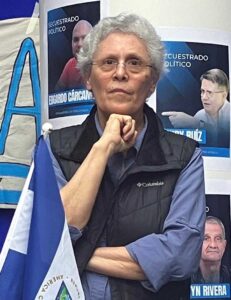 © Dora María Téllez (privat)
Dora María Téllez can provide us with information about critical moments in social revolutionary movements in relation to democracy and human rights. Nicaragua is not the only country where a left-wing government is drifting towards authoritarianism – what can we learn from this for international solidarity?
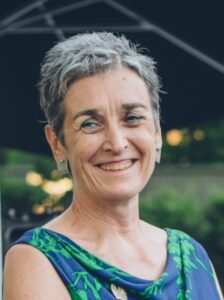 © Ulrike Lunacek (privat)
About the moderator: Ulrike Lunacek, an interpreter for English and Spanish trained at the University of Innsbruck, co-founded the Autonomous Women’s Shelter Tyrol in 1981 before returning to Vienna and becoming involved in development policy education (Frauen*solidarität, ÖIE/Südwind). During this time, she co-founded WIDE Austria. In 1995, she ran for the National Council as the first openly lesbian politician in Austria for the Green Party. Her political career took her from the federal executive committee of the Green Party (1996-1998) to the Austrian Parliament (1999-2009) and then to the European Parliament (2009-2017), where she was, among other things, rapporteur for Kosovo and co-chair of the LGBTI Intergroup. From 2014 to 2017, she was Vice-President of the European Parliament, responsible for the Sakharov Prize for Freedom of Thought, among other things.
She now lives in Vienna as an author, presenter, and speaker, and is also deputy chairwoman of Frauen*solidarität.
Limited number of participants (20 people).
Organized by: WIDE – Development Policy Network for Women’s Rights and Feminist Perspectives